PENSO's Frameworks: Cognitive network science
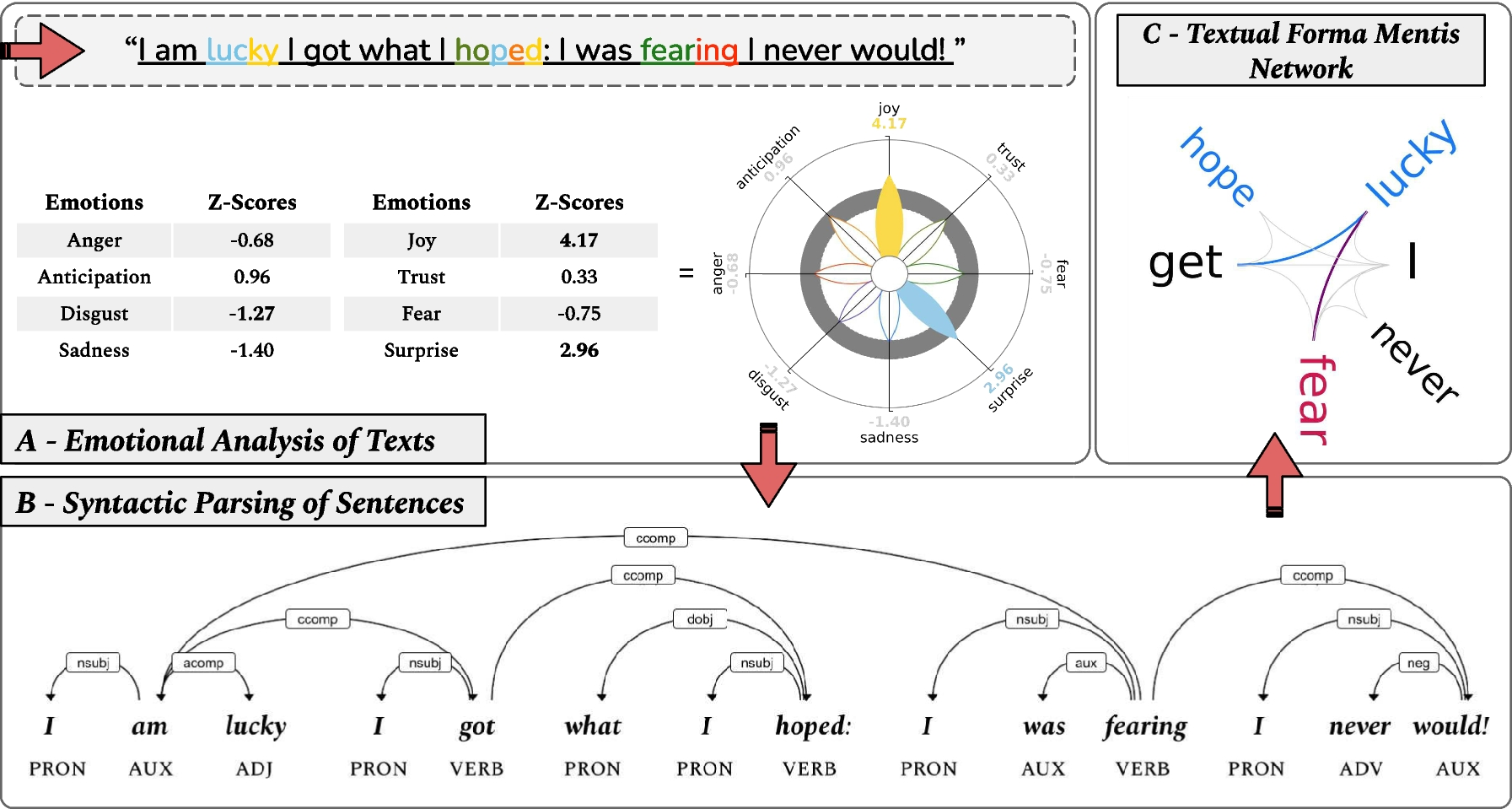
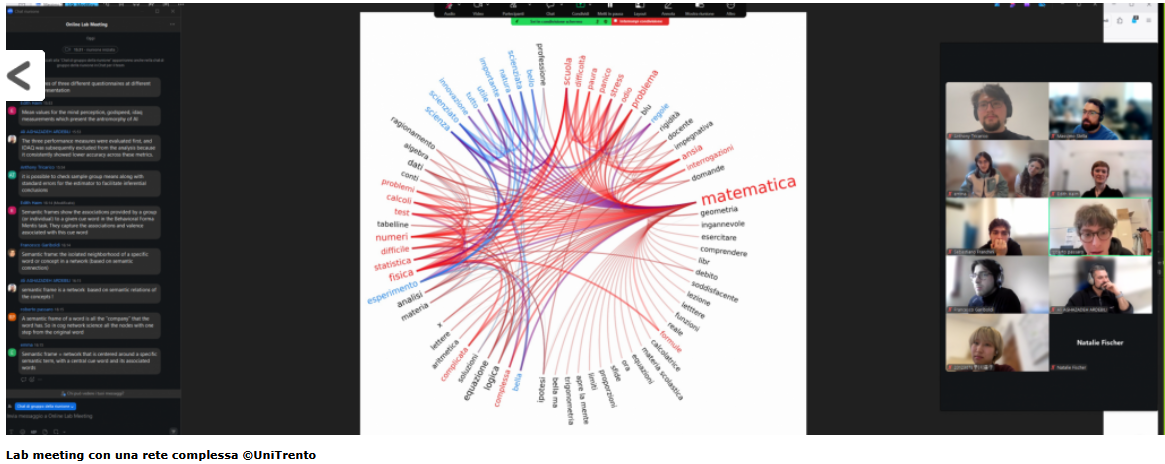
From text to interpretable cognitive maps: Textual forma mentis networks.
PENSO builds on a central idea of cognitive network science (Haim and Stella, 2026): language can be
transformed into a structured map of concepts, associations, and affective
meanings. In textual forma mentis networks (Stella, PeerJ CompSci, 2020), words are not treated as isolated
tokens. They become nodes in a cognitive graph, connected through syntactic,
semantic, and emotional relations that reveal how a text organises meaning.
This framework is especially relevant for studying LLMs. When models generate
explanations, debates, or psychometric self-descriptions, they also produce
latent structures of association: which concepts are central, which emotions
surround them, and which ideas are linked or kept apart. Tools such as
EmoAtlas make these structures visible by combining AI-based parsing, validated
emotion lexicons, and network visualisation.
textual forma mentis
semantic networks
emotion labels
interpretable AI